
| Best type for joints | Type II collagen is the main collagen in cartilage, so it is the one most tied to joints. |
| Two forms | UC-II (undenatured type II) at a tiny ~40 mg dose, or hydrolyzed peptides (types I & III) at ~10 g. |
| How it works | Peptides supply building-block amino acids; UC-II works through a different oral-tolerance mechanism. |
| Label tip | Match the dose to the form, check the collagen type & source, and look for added vitamin C. |
Collagen is everywhere right now — in coffee creamers, protein powders, gummies and dedicated joint capsules — and the marketing rarely stops to explain the one thing that actually matters: there is more than one kind of collagen, and they are not interchangeable for joints. Ask “what is the best collagen for joints?” and the honest answer starts with a question of its own: which type, in which form, at which dose? Get those three right and the label suddenly makes sense. Get them wrong and you may be taking a beautifully marketed product built for skin, not knees.
This guide walks through it in the ingredient-and-mechanism spirit of everything we publish — no hype, no disease claims, just how each form works, the dosing context, and the label details that separate a meaningful product from a trend.
Collagen is the body’s most abundant protein — the structural scaffolding of skin, bone, tendon, ligament and cartilage. There are many types, but three dominate the supplement world:
The headline takeaway: if joints are your goal, type II is the collagen of the cartilage — but, as we will see, that does not automatically mean a type II product is the only sensible choice, because form changes everything.
This is where most shoppers get lost, so let’s make it simple. Collagen for joints comes in two fundamentally different forms that work in completely different ways and are dosed completely differently.
Hydrolyzed collagen has been broken down into small fragments called peptides. The idea is nutritional: these peptides are digested into amino acids — especially glycine, proline and hydroxyproline — that the body can use as raw material to support its own connective-tissue maintenance. Because it works as a building-block supply, hydrolyzed collagen is used in relatively large amounts, commonly around 10 grams per day, and it is usually sourced as types I and III (bovine or marine).
Undenatured type II collagen is the opposite approach. Instead of being broken down, it is kept in its natural, folded three-dimensional shape. It is used in a tiny dose — typically around 40 mg per day — because it does not work as raw material at all. It is thought to work through a mechanism called oral tolerance, in which small amounts of the intact protein interact with immune tissue in the gut to support the body’s own balanced response around cartilage. Same collagen type, entirely different strategy, and a thousand-fold difference in dose.
That contrast is exactly why you cannot judge a collagen product by milligrams alone — a “40 mg” UC-II capsule and a “10,000 mg” peptide scoop can both be correctly dosed for what they are. As always, the key is to read past the front panel, a skill we cover in depth in how to read a joint supplement label.
The two forms have been tested in different ways, which is part of why the answer is not simply “more milligrams.” A multicentre, randomised, double-blind, placebo-controlled study of UC-II undenatured type II collagen and knee joint flexibility (Schön and colleagues, Journal of Integrative and Complementary Medicine, 2022) worked at the low, 40 mg end of the range rather than the multi-gram end used for peptides.
Here is the compliant, honest verdict. Both forms are traditionally used to support joint comfort and healthy connective tissue — neither is a painkiller or a treatment for any joint condition. The “best” one depends on what you want:
What is not a good choice is a low-milligram “type I & III” capsule sold for joints: at peptide doses that small, there is simply not enough raw material to matter. Dose has to match form.
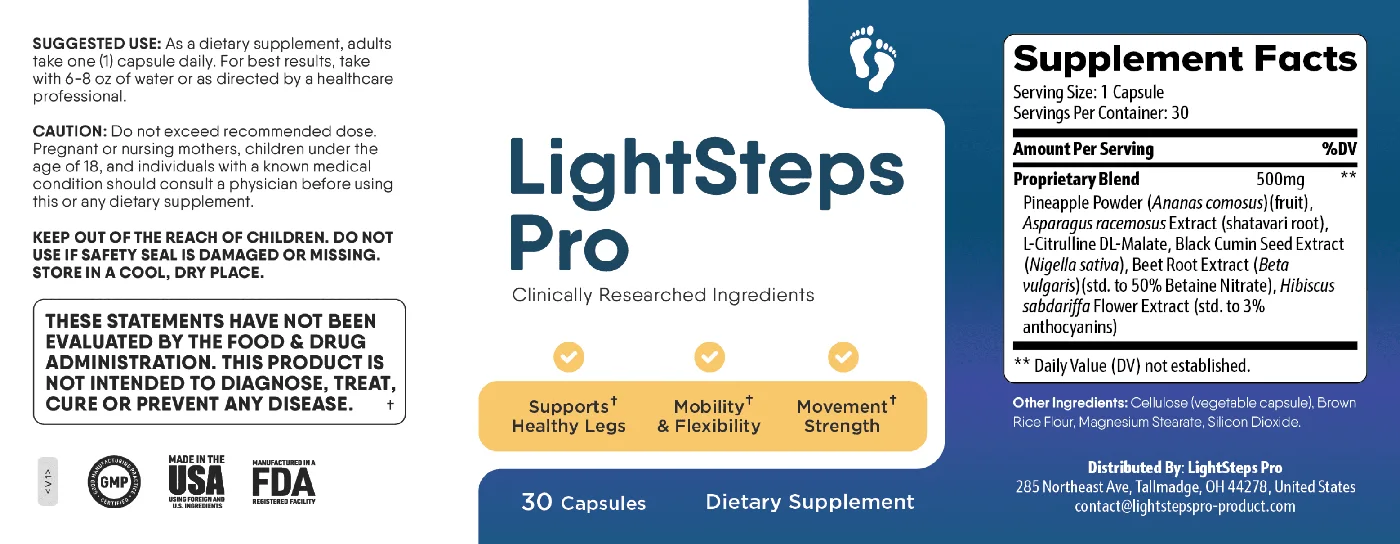
Prefer to skip animal collagen? LightSteps Pro is a vegetarian formula that supports comfort and circulation with six plant actives — pineapple bromelain, black cumin, hibiscus, beet root, shatavari and L-citrulline — in one daily capsule, backed by a 60-day guarantee.
Hydrolyzed peptides have been looked at in everyday, non-clinical settings too. A randomised controlled trial published in the International Journal of Environmental Research and Public Health examined the impact of specific bioactive collagen peptides on joint discomforts in the lower extremity during daily activities — the stairs-and-standing-days context most readers actually care about.
Collagen is an animal protein, so it always comes from an animal tissue, and the source is worth checking on the label:
Because none of these are vegetarian or vegan, people who prefer a plant-first approach often choose botanical comfort-and-circulation formulas instead, or focus on vitamin C and plant compounds that support the body’s own collagen-building processes.
Collagen is only one of the cartilage-adjacent ingredients on the shelf, and it is worth knowing how it differs from the older pairing of glucosamine and chondroitin, which supply cartilage building blocks rather than collagen fragments.
Collagen, whichever form you choose, is one piece of the puzzle — not the whole picture. Comfortable movement rests on four pillars: comfort support, circulation, recovery and, above all, consistent movement and strength work. Collagen chiefly addresses the connective-tissue side; circulation is supported by nitrate-rich ingredients like beet root, and the daily habits that do the heavy lifting are pulled together in our guide to supporting healthy legs and joint mobility naturally. For those who would rather not take an animal protein, a plant-first formula like LightSteps Pro reaches comfort-and-circulation goals through a complementary route.
The overall picture is still developing rather than settled: a review of the literature with limited meta-analysis on the efficacy of undenatured collagen in knee osteoarthritis (Kumar and colleagues, American Journal of Translational Research, 2023) is a fair summary of where the evidence sits, and none of it makes collagen a treatment for any condition.
Collagen is generally very well tolerated, but a few notes apply:
As always, follow the dose on the label for the specific form you have chosen, and let your own clinician weigh in on your personal situation.
For joints, type II is the collagen of cartilage — but the form decides everything. Undenatured type II (UC-II) works at a tiny ~40 mg dose through an oral-tolerance mechanism, while hydrolyzed peptides (types I & III) work at ~10 g by supplying building-block amino acids. Both are supportive of joint comfort and healthy connective tissue, not painkillers or cures. When you shop, match the dose to the form, check the collagen type and animal source, and favour products that add vitamin C. And if you would rather avoid animal protein altogether, a vegetarian, plant-first formula is a legitimate alternative route to supporting comfort and circulation — because collagen, like every ingredient, does its best work inside a broader routine of movement, nutrition and rest.
Type II collagen is the main collagen in cartilage, so it is the type most associated with joints. Two forms are used in supplements: undenatured type II collagen (UC-II), taken in tiny amounts, and hydrolyzed collagen peptides (often types I and III), taken in larger amounts to supply building-block amino acids. Both are used to support joint comfort and healthy connective tissue rather than to treat any condition.
Hydrolyzed collagen is broken into small peptides that supply amino acids like glycine and proline, typically dosed around 10 grams a day. Undenatured type II collagen (UC-II) is kept in its natural folded shape and used in a very small dose, around 40 mg, because it works through a different oral-tolerance mechanism rather than as raw material.
It depends on the form. Hydrolyzed collagen peptides are commonly used at about 10 grams per day, while undenatured type II collagen (UC-II) is used at roughly 40 mg per day. Match the dose to the form on the label, take it consistently, and give it time. Consult a clinician if you have any medical condition.
No. Collagen is an animal protein sourced from bovine, porcine, chicken or marine tissue, so it is not vegetarian or vegan. People who prefer a plant-first approach often choose botanical formulas that support comfort and circulation instead, or add vitamin C and plant compounds that support the body’s own collagen-building processes.
Vitamin C is a required cofactor for the body’s own collagen synthesis, which is why many collagen products include it. Getting enough vitamin C from diet or a supplement supports the body’s natural ability to build and maintain collagen in connective tissue.
Give your legs and joints six plant actives in one vegetarian daily capsule — pineapple bromelain, black cumin, hibiscus, beet root, shatavari and L-citrulline. Best value on the multi-bottle packs.
Get LightSteps Pro Today
The LightSteps Pro Research Team is an independent group of nutrition and mobility writers who translate ingredient science into plain language for everyday readers. We review the published literature and traditional-use record for each ingredient we cover, and we do not make disease or treatment claims. This article is educational and reflects general and traditional use of the ingredients discussed — it is not medical advice.
† These statements have not been evaluated by the FDA. This product is not intended to diagnose, treat, cure or prevent any disease. This article is for general information only and is not medical advice.