
| The big idea | A milligram number alone tells you almost nothing. Standardization, activity units and form decide whether a dose is real or decorative. |
| Standardization | “Standardized to X%” means the extract is concentrated and tested for a key active — consistency you can trust. |
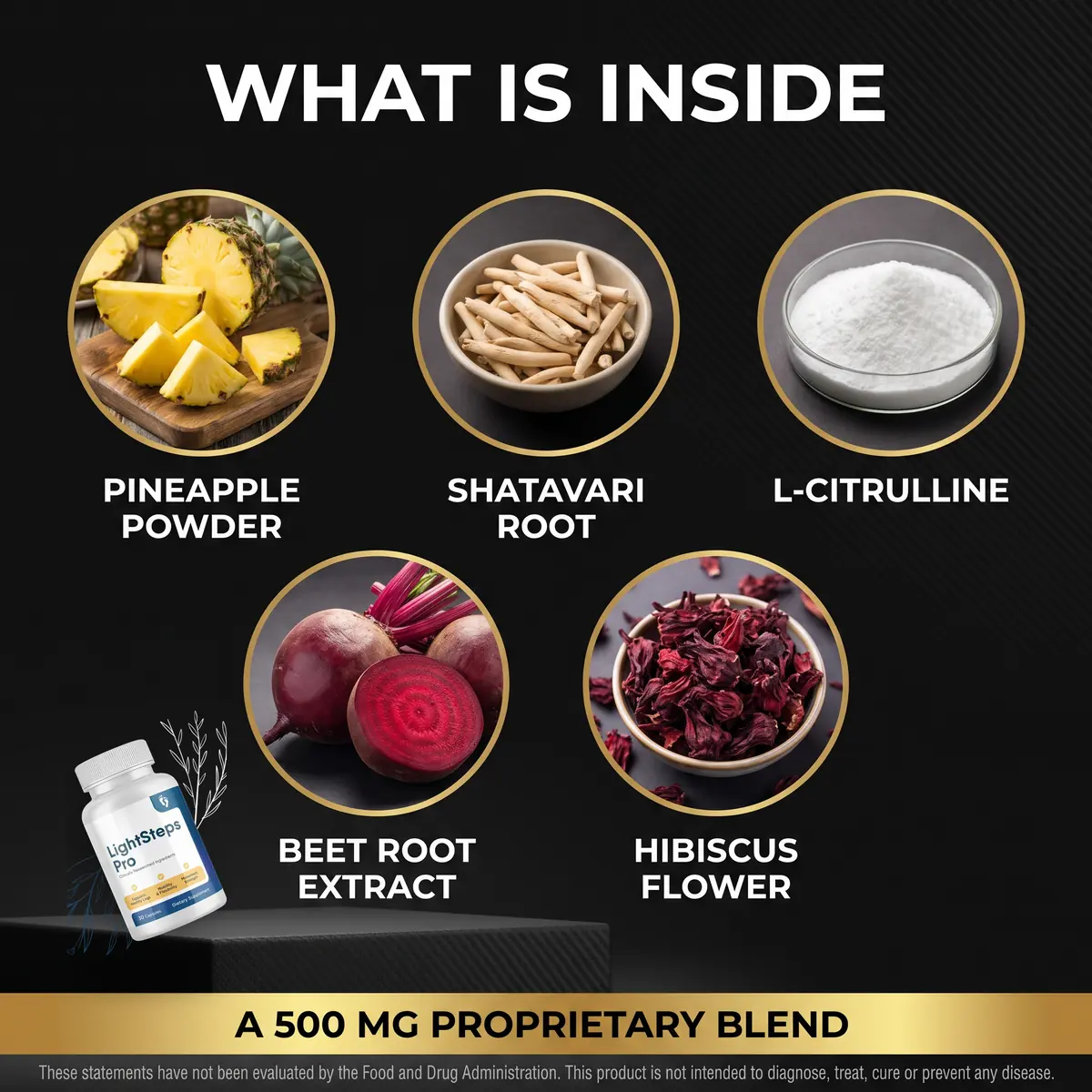
| Proprietary blend | A named group of ingredients with a total weight; fine when disclosed and ordered by weight. |
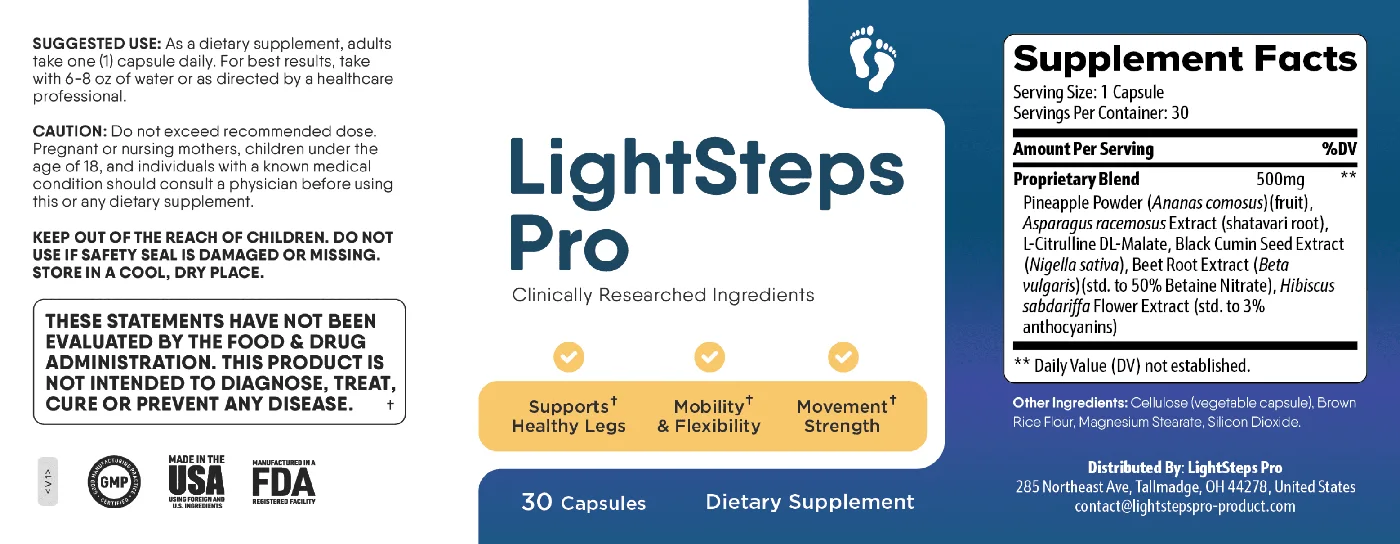
| Read the fine print | Check %DV, the two-asterisk note, and the “other ingredients” line for allergens and capsule type. |
Two joint supplements can look almost identical on the shelf — similar ingredients, similar promises, similar milligram numbers — and yet be worlds apart in what they actually deliver. The difference is written on the label, in a handful of details most shoppers skim right past. This guide teaches you how to read a joint supplement label like an ingredient reviewer: how to decode standardization, spot the truth about proprietary blends, understand dosing and forms, and tell a meaningful formula from an expensive placebo of good intentions.
Everything here applies to any supplement, but we will use joint-and-mobility actives — the kind found in formulas like LightSteps Pro — as worked examples, because they show every label concept in action.
The front of a bottle is marketing. The Supplement Facts panel on the back is the legally regulated truth. Train yourself to flip the bottle over first. That panel must tell you the serving size, the number of servings per container, each active and its amount, the %DV where one exists, and the “other ingredients” list. Master those fields and no clever front-label claim can mislead you.
If you learn only one label skill, make it this one. Standardization means an extract has been concentrated and laboratory-tested so that each serving contains a guaranteed percentage of a specific active compound. It is the difference between “some beet root” and “beet root that reliably delivers its circulation-supporting nitrates.”
Look for phrasing like these real-world examples:
When you see a plain listing — “hibiscus powder,” “beet root” — with no percentage, you have no guarantee of how much active it carries. That is not automatically bad, but it is a question mark, and a standardized version is almost always the more dependable choice.
The gap between what a panel prints and what a capsule contains is a real, documented problem. A study in the International Journal of Sport Nutrition and Exercise Metabolism tracked the variability of stimulant levels in nine sports supplements over a nine-month period — different category, same lesson: the number on the label is a claim, and quality control is what makes it a fact.
For most ingredients, weight is a fair measure. For enzymes, it is not. An enzyme like bromelain (from pineapple) is defined by its activity, so its real strength is given in units — GDU (Gelatin Digesting Units) or FCC PU — not milligrams. Two products can both claim “500 mg bromelain” and differ enormously in potency. If an enzyme lists only milligrams with no activity figure, treat it as unproven. We go deeper on this in what bromelain does for joints.
The form of an ingredient changes how much of the active you truly get and how well you absorb it. A few you will meet on mobility labels:
LightSteps Pro publishes its full Supplement Facts — standardized extracts, named actives, one clear 500 mg blend. See exactly what is inside.
Researchers have started to formalise why shoppers misread these panels. A 2026 paper in The Journal of Nutrition proposes a conceptual framework for ingredient-interpretation gaps in food supplements, which is a rigorous way of saying that labels are read as impressions rather than as data.
A proprietary blend lists a group of ingredients under one name with a single total weight, without breaking out each individual amount. It has a bad reputation, but the truth is more nuanced.
The legitimate case: a blend protects a genuinely novel recipe from copycats, and by law the ingredients must be listed in descending order of weight and the total must be disclosed. So “500 mg proprietary blend” followed by six named botanicals tells you the total dose and the rough pecking order. For a synergistic formula where the combination is the point — six actives working together rather than a mega-dose of one — that can be perfectly reasonable.
The red flags: be wary when a blend hides a long list of exotic-sounding ingredients behind a tiny total weight (a technique called “fairy dusting,” where trace amounts create an impressive-looking list), or when the total itself is not disclosed. The test is transparency: is the total stated, are the ingredients named and ordered, and is the total large enough to matter?
Next to each ingredient you will see a %DV (percent Daily Value) figure — the share of the official recommended daily intake that a serving provides. For vitamins and minerals this is useful. For most botanicals, though, you will see two asterisks (**) and a note reading “Daily Value not established.” This is completely normal: regulators simply have not set a Daily Value for herbs like shatavari, hibiscus or black cumin. The asterisks are not a warning — they are just honesty about the state of the reference tables.
Below the actives sits the other ingredients line — the non-active components that make a capsule possible. Here you will find things like the capsule material (cellulose for a vegetarian capsule vs gelatin), a flow agent such as magnesium stearate, an anti-caking agent like silicon dioxide, and any filler such as rice flour. This line is where you check for:
For the ground rules that sit underneath every panel — what a supplement legally is, what a manufacturer may and may not claim, and what regulators do and do not check — the NIH Office of Dietary Supplements consumer guide, Dietary Supplements: What You Need to Know is the reference to keep bookmarked.
Two identical-looking formulas can still differ in quality of manufacture. Look for signals that the product was made responsibly: made in an FDA-registered facility (this refers to the facility being registered, not to FDA approval of the product), GMP-certified (Good Manufacturing Practices), and ideally third-party tested. Non-GMO and made-in-USA claims speak to sourcing standards. None of these replace the Supplement Facts panel, but together they round out the picture of a formula you can trust.
Two panels are worth practising on, because they show the two hardest cases: an ingredient sold in wildly different forms, as in MSM and its sulfur content, and a botanical whose potency lives entirely in a standardization percentage.
Run any bottle through that checklist and you will instantly see past the marketing. For the fundamentals of using these ingredients well once you have chosen a quality product, see how to support healthy legs and joint mobility naturally.
Standardization means the extract has been concentrated and tested so each serving carries a stated percentage of a key active — for example beet root standardized to 50 percent betaine nitrate or hibiscus to 3 percent anthocyanins. It guarantees a consistent, measurable amount rather than a variable one.
Not necessarily. A proprietary blend lists the total weight of a group of ingredients without breaking down each one. It protects a formula recipe, but it means you see the blend total rather than individual amounts. The key is that the blend total is disclosed and the ingredients are named in order of weight.
%DV is the percentage of the recommended Daily Value a serving provides. Many botanical ingredients have no established Daily Value, so their line shows two asterisks meaning “Daily Value not established.” That is normal and expected for herbal actives.
Enzyme potency depends on activity, not weight. Bromelain is measured in GDU or FCC PU units, so two products with the same milligrams can differ greatly in strength. Always check for an activity figure alongside the milligrams.
Other ingredients are the non-active components such as the capsule material, flow agents and fillers — for example cellulose capsule, rice flour, magnesium stearate and silicon dioxide. Reviewing them helps you check for allergens and confirm the capsule is vegetarian if that matters to you.
Six named botanicals, standardized extracts and one transparent 500 mg blend — the kind of label this guide teaches you to look for. Best value on the multi-bottle packs.
Get LightSteps Pro Today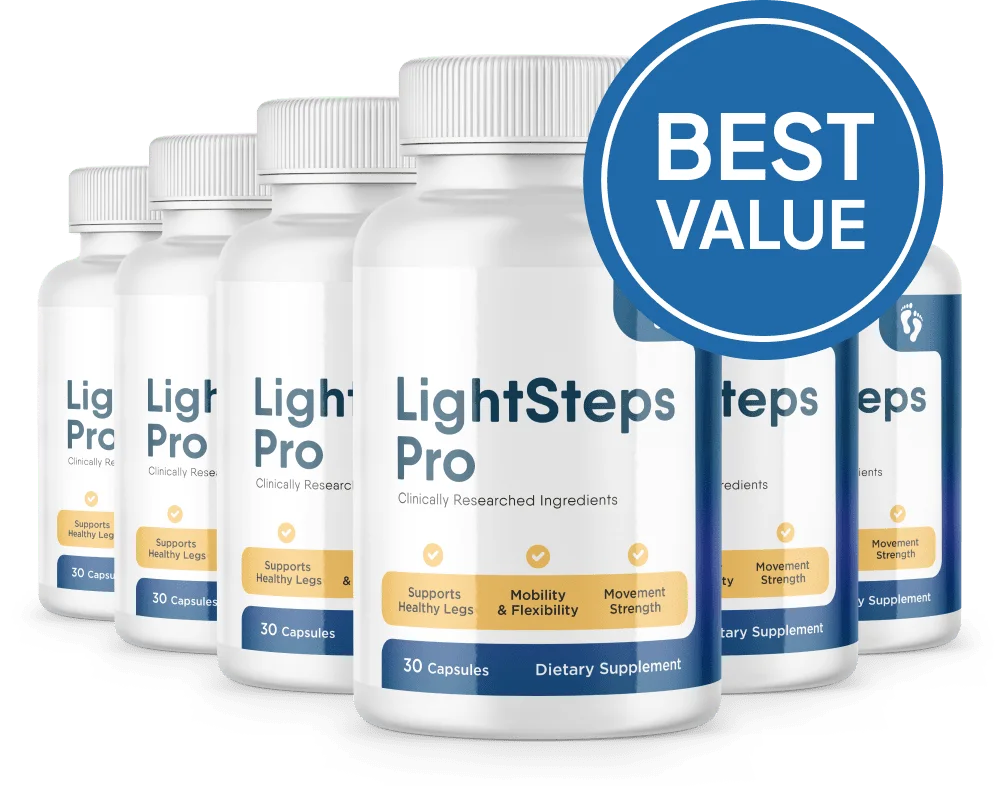
The LightSteps Pro Research Team is an independent group of nutrition and mobility writers who translate ingredient science and label conventions into plain language. We reference published nutrition science and U.S. supplement labeling regulations, and we make no disease or treatment claims. This article is educational and is not medical advice.
† These statements have not been evaluated by the FDA. This product is not intended to diagnose, treat, cure or prevent any disease. This article is for general information only and is not medical advice.