
| Glucosamine | An amino sugar the body uses as a raw material to build cartilage’s cushioning molecules. |
| Chondroitin | A large sugar chain already inside cartilage that helps it hold water and stay springy. |
| Why paired | One is a building block, the other is part of the finished structure — complementary, not competing. |
| Label tip | Look for glucosamine sulfate ~1,500 mg and chondroitin sulfate ~800–1,200 mg, with the form named. |
Walk down any joint-support aisle and two names dominate the shelf, almost always printed side by side: glucosamine and chondroitin. They are so often sold as a pair that many people assume they are two words for the same thing. They are not. They are different molecules that do different jobs in your cartilage, and understanding glucosamine vs chondroitin is the fastest way to read one of these labels with confidence instead of guessing.
This guide answers the question plainly and compliantly: what is each ingredient, how does each one actually work in a joint, why are they combined, and what should the label tell you? As with everything we publish, there are no disease claims here — just the mechanism, the tradition of general use, and the numbers that separate a serious formula from a decorative one.
Glucosamine is an amino sugar — a small molecule your body makes naturally from glucose and the amino acid glutamine. It is one of the fundamental raw materials your cells draw on to build the big cushioning molecules of cartilage, the smooth connective tissue that caps the ends of your bones and lets them glide instead of grind.
Think of glucosamine as a building block rather than a finished part. In supplements it usually appears as glucosamine sulfate or glucosamine hydrochloride (HCl), and much of it is derived from the shells of shellfish (a detail that matters if you have a shellfish allergy; vegetarian, corn-fermented versions also exist). Because the body normally makes its own supply, glucosamine supplements are traditionally used to support the raw materials of healthy cartilage and comfortable everyday movement — not to override anything or numb a signal.
Chondroitin — more precisely chondroitin sulfate — is a completely different kind of molecule. It is a glycosaminoglycan, a long, chain-like sugar that is already woven into the structure of cartilage. If glucosamine is a brick, chondroitin is closer to the finished wall.
Its signature trick is holding water. Chondroitin chains carry a strong negative charge that draws water into cartilage, keeping the tissue plump, springy and able to absorb the load of every step. That water-holding, shock-absorbing quality is exactly why chondroitin is traditionally paired with glucosamine: one supplies raw material, the other represents the resilient, hydrated structure that raw material helps maintain.
Here is the whole distinction in plain English. Glucosamine is a small building-block sugar the body uses to make cartilage components; chondroitin is a large finished sugar chain inside cartilage that helps it hold water and stay resilient. Glucosamine feeds the process; chondroitin is part of the product of that process. Neither is a painkiller, and neither treats or cures any joint condition — both are supportive nutrients traditionally used to help the body maintain healthy cartilage and comfortable movement over time.
The pairing has been examined directly. A systematic review and network meta-analysis in the Journal of Clinical Medicine compared the efficacy of glucosamine-based combination therapies in alleviating knee osteoarthritis pain (Sumsuzzman and colleagues, 2024), which is the closest thing to a like-for-like answer on whether the combination earns its place.
Because their roles are complementary rather than competing. A combination product tries to cover two bases at once: supply the building-block sugar (glucosamine) and top up the water-holding structural molecule (chondroitin). Much of the best-known long-term research on joint comfort studied the two together, at specific doses, which is a large part of why the pairing became the category standard.
That said, "combined" is not automatically "better for everyone." Some people use glucosamine alone; others prefer a broader formula. And plenty of well-designed products reach comfort-and-mobility goals through an entirely different route — plant enzymes, antioxidant botanicals and circulation support — rather than the glucosamine/chondroitin axis. The point is to know what each ingredient does so you can judge any label on its merits, a skill we break down fully in our guide to how to read a joint supplement label.
Both ingredients sit firmly in the "work with the body's own maintenance" category. Glucosamine provides a raw material your cartilage-building cells (chondrocytes) can use; chondroitin contributes to the hydrated, cushioning matrix and is studied for how it supports that matrix staying resilient. Neither blocks a pain sensation the way a drug does. Instead they are traditionally used to support the structure and comfort of joints that are doing ordinary work — the daily walking, climbing and standing that a healthy, active life is made of.
This makes them philosophical cousins of the supportive botanicals we cover elsewhere, such as boswellia serrata and pineapple bromelain. All of them aim to support the body's own processes rather than mask a signal — which is also why they are so often combined into a single, well-rounded routine.
For wider context on how these ingredients rank against everything else offered for the same problem, a systematic review and network meta-analysis in Drugs assessed the symptomatic efficacy of pharmacological treatments for knee osteoarthritis over a six-month horizon (Beaudart and colleagues, 2020).
As with any ingredient, milligrams on the front panel mean little without knowing the form and the total daily amount. Here is the typical picture:
You will see two forms. Glucosamine sulfate is the version used in most of the long-running research, and it also delivers sulfate, which cartilage itself uses. Glucosamine HCl packs more glucosamine per gram but supplies no sulfate. Neither is "wrong" — the key is that a good label tells you which form you are getting and how many milligrams of that form, so you can compare apples to apples rather than being dazzled by a big round number.
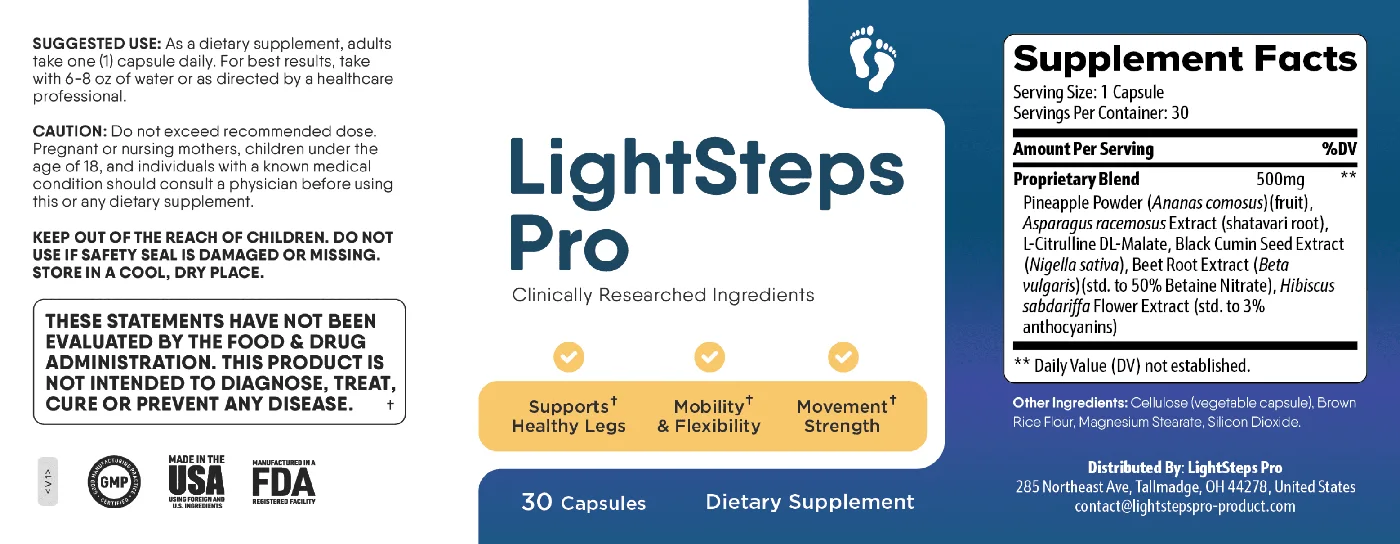
Prefer a botanical approach? LightSteps Pro takes a whole-system route with six plant actives — pineapple bromelain, black cumin, hibiscus, beet root, shatavari and L-citrulline — in one daily capsule, backed by a 60-day guarantee.
These two are usually met alongside two other shelf-mates. If you are comparing them with the cartilage-protein approach, see our guide to the best collagen for joints; for the sulfur-donor approach that so often shares the same bottle, see what MSM does for joints.
No single ingredient carries a mobility routine, and this pair is no exception. Glucosamine and chondroitin play the structure-and-cushioning support role, and they do their best work alongside the other pillars of comfortable movement: comfort-support botanicals, circulation support and, above all, consistent movement. Circulation, for instance, is supported by nitrate-rich ingredients such as beet root, while the everyday habits that do the heavy lifting — movement, nutrition and rest — are gathered in our guide to supporting healthy legs and joint mobility naturally. A formula like LightSteps Pro reaches comparable comfort-and-circulation goals through a complementary set of plant actives.
The National Center for Complementary and Integrative Health summary of glucosamine and chondroitin for osteoarthritis is the most even-handed public account of what the trials have and have not shown, including the shellfish-allergy question raised below.
Both ingredients are generally well tolerated, but "natural" never means "consequence-free." Talk to a healthcare professional before using glucosamine or chondroitin if you:
Mild digestive upset is the most commonly reported effect. Start with the amount on the label, give any new ingredient several weeks, and let your own clinician weigh in on your medications and personal situation.
Glucosamine and chondroitin are not rivals and not duplicates — they are two halves of the same idea. Glucosamine is the small building-block sugar the body uses to make cartilage components; chondroitin is the large, water-holding chain that gives cartilage its springy resilience. That is exactly why they are so often paired, and why the researched doses (roughly 1,500 mg glucosamine and 800–1,200 mg chondroitin daily) are worth knowing. When you shop, read past the front-panel number to the form, the milligrams of that form and the source. And remember that this pair, like any single approach, delivers most as one instrument in a wider routine of structure support, circulation and consistent movement.
Glucosamine is an amino sugar the body uses as a raw material to build cartilage’s cushioning molecules, while chondroitin is a large sugar chain (a glycosaminoglycan) that helps cartilage hold water and stay resilient. In short, glucosamine is a building block and chondroitin is part of the finished structure, which is why the two are so often combined.
Many formulas pair them because they play complementary roles in cartilage and are traditionally used together for everyday joint comfort and structure support. Whether a combination or a single ingredient suits you depends on your goals and on your clinician’s advice, especially if you have a shellfish allergy or take blood thinners.
Glucosamine is commonly used at about 1,500 mg per day (often as glucosamine sulfate) and chondroitin at about 800 to 1,200 mg per day (as chondroitin sulfate), sometimes split into two or three doses. Always follow the label and speak with a clinician about your own situation.
Both deliver glucosamine. Glucosamine sulfate is the form used in most of the long-running research and also supplies sulfate, which cartilage uses. Glucosamine HCl is more concentrated per gram but contains no sulfate. The label should tell you which form and how many milligrams of it you are getting.
People with a shellfish allergy should check the source, since much glucosamine is derived from shellfish. Anyone on blood-thinning medication, who is pregnant or nursing, or who has diabetes or an ongoing medical condition should speak to a healthcare professional first. These are supportive supplements, not treatments for any disease.
Give your legs and joints six plant actives in one daily capsule — pineapple bromelain, black cumin, hibiscus, beet root, shatavari and L-citrulline. Best value on the multi-bottle packs.
Get LightSteps Pro Today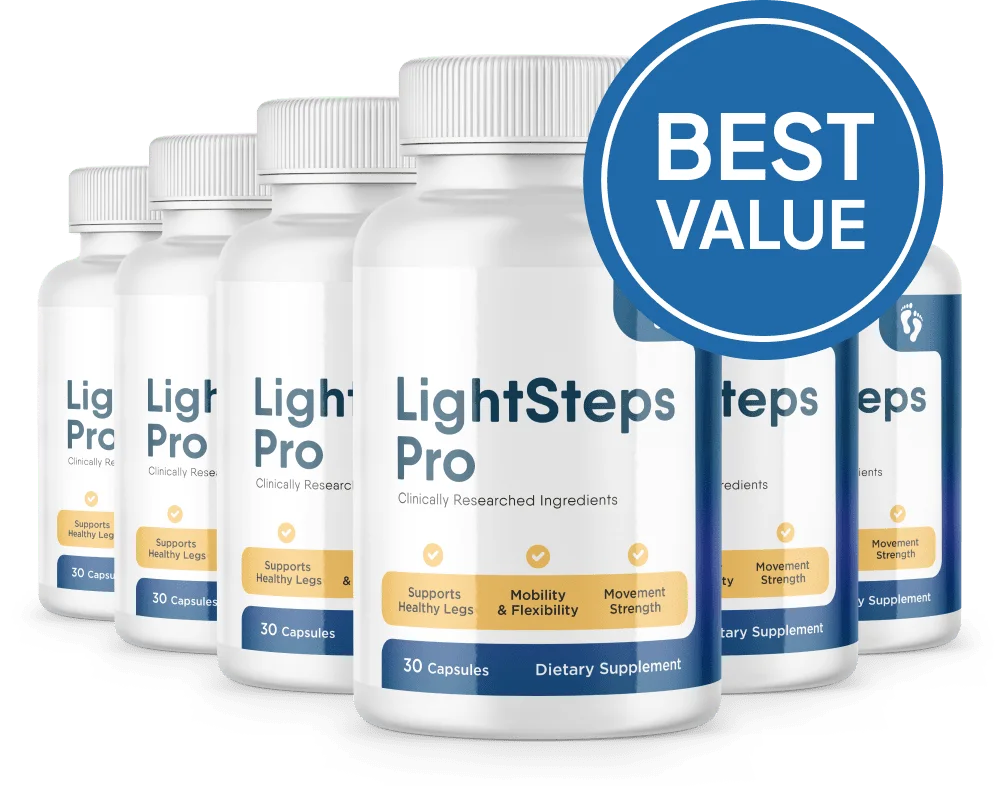
The LightSteps Pro Research Team is an independent group of nutrition and mobility writers who translate ingredient science into plain language for everyday readers. We review the published literature and traditional-use record for each ingredient we cover, and we do not make disease or treatment claims. This article is educational and reflects general and traditional use of the ingredients discussed — it is not medical advice.
† These statements have not been evaluated by the FDA. This product is not intended to diagnose, treat, cure or prevent any disease. This article is for general information only and is not medical advice.